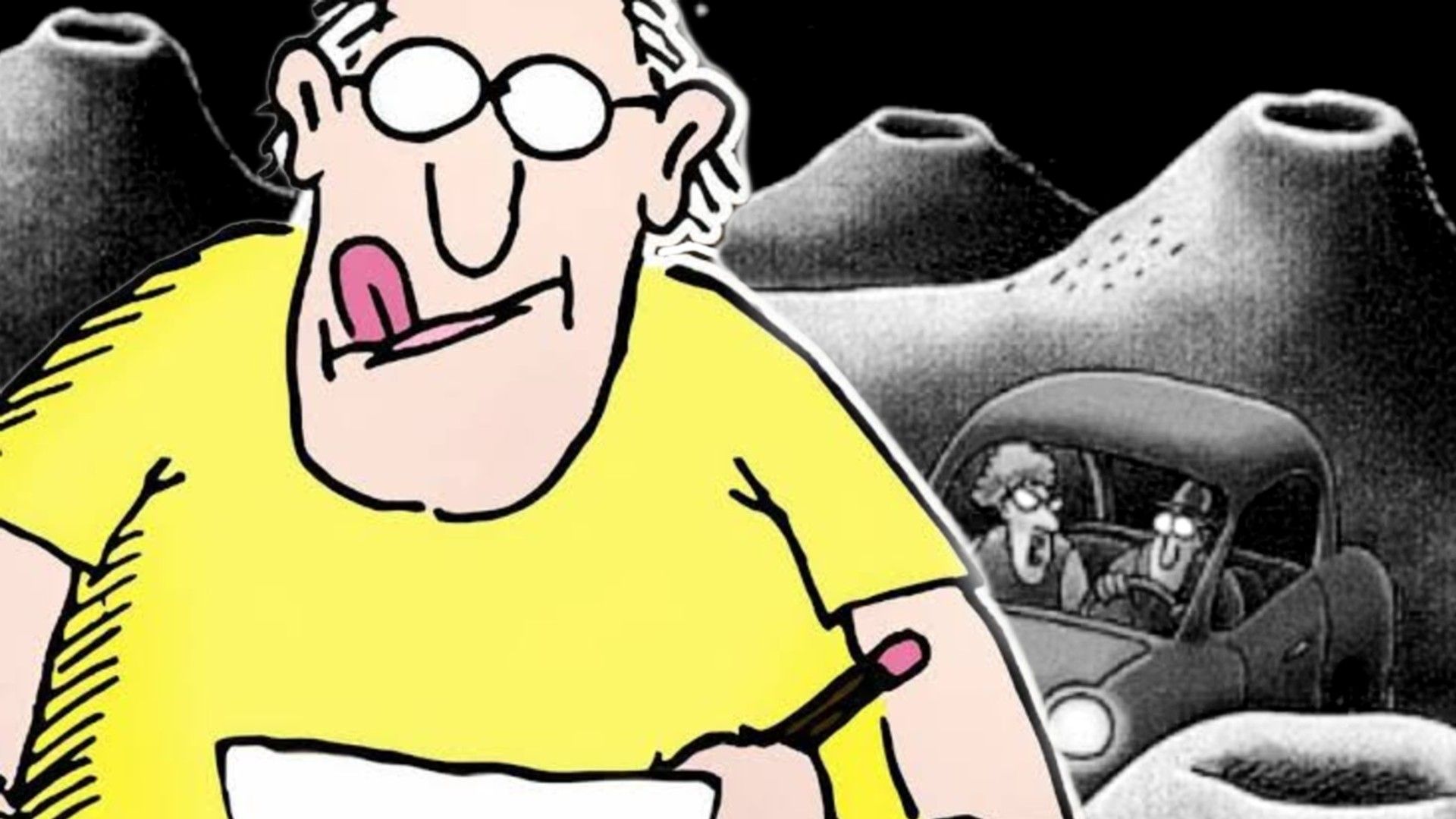
Long before achievement hunting, battle passes, and esports arenas, Gary Larson’s The Far Side was quietly taking notes on where video games were headed. Widely regarded as one of the most legendary single-panel comic strips of all time, The Far Side built its reputation on absurdist humor — but as ScreenRant Gaming recently highlighted, some of its gags now read less like jokes and more like prophecies.
The Nintendo Comic That Reads Like a Prophecy Today
Published roughly 36 years ago, during the height of the NES craze that swept North America after the Nintendo Entertainment System launched, the strip in question zeroed in on the “Nintendo boom” with a gag about a young gamer whose marathon play sessions had left a very visible mark — his overworked thumb swollen to cartoonishly absurd proportions. The “Nintendo thumb” punchline was classic Larson: suburban life exaggerated just past the edge of plausibility.
At the time, the joke worked because it was ridiculous. Nobody’s thumb actually ballooned from stomping Goombas. It was a satirical nod to a very ’80s parental anxiety: the fear that this new Nintendo machine was consuming their kids whole.
The Punchline Literally Became a Medical Term
Here’s where the prediction gets eerie. In the early 1990s — just a few years after that comic ran — medical literature began documenting a condition informally nicknamed “Nintendinitis,” describing repetitive strain injuries in young players. What Larson played for laughs had walked straight into the pages of medical journals.
From “Nintendo Thumb” to Gamer’s Thumb
Today, “gamer’s thumb” is common shorthand for De Quervain’s tenosynovitis, an inflammation of the tendons that esports professionals and dedicated hobbyists alike know all too well. Wrist injuries, carpal tunnel concerns, and hand fatigue are now serious enough that pro gaming organizations employ physical therapists and trainers to keep players’ hands healthy. Some competitive players have even retired early due to hand and wrist damage.
Gaming Disorder Goes Official
The comic’s broader theme — excessive gaming leaving a lasting impact — gained another layer of legitimacy in 2018, when the World Health Organization officially recognized “gaming disorder” in the 11th revision of its International Classification of Diseases. A single-panel cartoon about a kid glued to his Nintendo ended up anticipating a genuine, decades-long conversation about how we play.
Why the Joke Lands Differently in 2025
Part of what makes the strip so prescient is the cultural shift it captured. In the late 1980s, video games were largely dismissed as a children’s fad, and Larson’s exaggeration leaned on that assumption. Fast forward to today: the gaming industry out-earns the film and music industries combined, the average gamer is an adult, and discussions about healthy play habits, screen time, and player wellbeing are mainstream news topics.
In other words, the comic has undergone a strange transformation. What once read as absurdist exaggeration now feels almost like documentary commentary. That’s the hallmark of great satire — it exaggerates reality just enough to be funny, then reality quietly catches up.
It’s also a testament to Gary Larson’s observational instincts. While The Far Side is remembered for talking cows and bizarre aliens, the strip had a sharp eye for human behavior, and its occasional forays into technology and gaming culture have aged remarkably well.
Relive the Classics That Started It All
Feeling nostalgic after that deep cut from gaming history? The NES era may be long gone, but Nintendo’s legacy lives on. If you want to jump back into modern Nintendo adventures — or gift a fellow gamer — you can pick up Nintendo eShop gift cards and game codes at TURGAME.com, where you’ll also find Steam wallet codes, PlayStation cards, Xbox subscriptions, and more at competitive prices.
Key Takeaways
A 36-year-old Far Side comic about “Nintendo thumb” predicted real-world gaming injuries like Nintendinitis and gamer’s thumb. Medical recognition of gaming-related strain, plus the WHO’s classification of gaming disorder, transformed Larson’s punchline into genuine cultural commentary. Sometimes, the funniest predictions are the ones that come true.
Source: ScreenRant Gaming