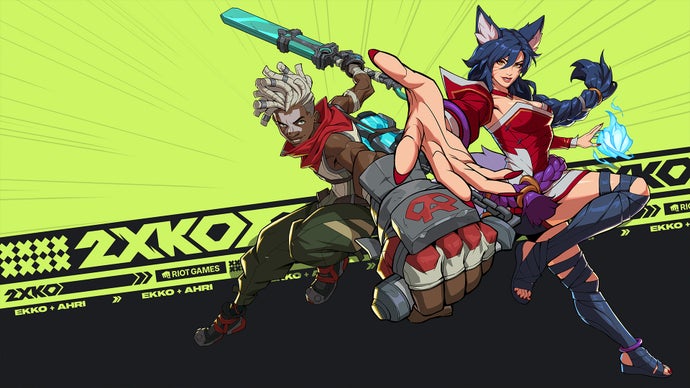
The League of Legends universe is losing one of its most ambitious spinoffs. Riot Games has confirmed that active development on 2XKO, its free-to-play fighting game set in the world of Runeterra, will come to an end this December. The announcement, shared by the developer earlier today, ends months of speculation about the project’s future — and highlights just how unforgiving the fighting game market can be, even for a studio with the resources of Riot Games.
Riot Games Officially Winds Down 2XKO Development
According to Riot, the decision to halt active development on 2XKO comes down to simple numbers: the game simply never achieved the adoption and retention rates needed to justify continued investment. Despite the enormous popularity of the League of Legends brand, the 2v2 tag-team fighter struggled to build a player base large enough — and sticky enough — to sustain long-term live development.
The news will sting for fans who had been eagerly following the title since its reveal. While the studio has not detailed exactly what the fighting game’s final state will look like after December, the messaging is clear: the pipeline of new content, balance updates, and fresh champions is drawing to a close.
A Dream Project Years in the Making
2XKO began life as “Project L,” a long-gestating fighting game helmed by Tony Cannon and Tom Cannon, the founders of both Radiant Entertainment and the Evolution Championship Series (EVO). That pedigree made the project especially exciting for fighting game enthusiasts. The game promised a 2v2 tag-team format starring beloved League champions such as Ahri, Yasuo, Ekko, and Darius, wrapped in a stylish, accessible free-to-play package for PC and consoles.
Public playtests through its Alpha Lab programs gave thousands of players a taste of the action, and early impressions were largely positive. Unfortunately, positive word of mouth in the fighting game community doesn’t always translate into the sustained player counts a live-service title demands.
Why the Fighting Game Genre Is So Brutal
The demise of 2XKO’s development is less a story about quality and more a story about market realities. The modern fighting game scene is fiercely competitive, dominated by heavyweights like Street Fighter 6, Tekken 8, and a rotating cast of anime and platform fighters. Retention is the genre’s eternal problem: casual players often bounce off the steep learning curve, while the hardcore audience is spread thin across multiple titles.
Riot’s bet was that the League of Legends IP — plus a free-to-play model that removed the traditional $60 entry fee — could break that cycle. It’s a strategy that worked spectacularly for Valorant in the shooter space. But fighting games live or die by their competitive ecosystems, and 2XKO never reached the critical mass required to keep the wheels turning.
What This Means for League of Legends Fans
For League players, the loss is mostly symbolic — the core MOBA, along with Riot’s other titles, remains unaffected. But 2XKO’s wind-down is a reminder that even the biggest names in gaming can’t guarantee success when expanding into new genres. It also raises questions about how Riot will approach spinoffs going forward, especially as the company continues experimenting beyond its flagship titles.
If you’re a Riot Games faithful looking to stock up on in-game currency, skins, or battle passes, you can grab Riot Access gift codes for League of Legends and Valorant at TURGAME.com at competitive prices.
December will mark the end of the road for one of Riot’s boldest experiments — and another cautionary tale for anyone underestimating just how hard it is to launch a fighting game in 2025.
Source: Rock Paper Shotgun