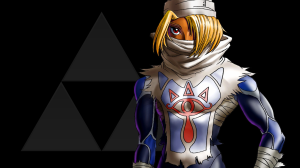
Few characters in Nintendo‘s storied catalog have sparked as much conversation about identity as Sheik, the mysterious ninja from The Legend of Zelda: Ocarina of Time. A recent personal essay from GameSpot argues that Sheik’s androgyny isn’t a side detail of the character—it’s the very essence of what makes them unforgettable, particularly for transgender and gender-nonconforming players.
A Reverence Built on Representation
Written by a transgender woman, the GameSpot piece opens with a confession many queer gamers will recognize: there are a handful of game characters that certain players hold “with a certain level of reverence” because those characters reflected parts of themselves long before mainstream games dared to.
During the author’s teenage years—what she describes as her “firmly still in the closet” period—she found herself drawn to Guilty Gear‘s Bridget, a character who blurred the lines between masculine and feminine presentation years before Bridget’s queer identity was made official canon in 2022’s Guilty Gear Strive.
Bridget and Vivian: Characters Who Blurred the Lines
The essay also highlights Vivian from Paper Mario: The Thousand-Year Door as an equally impactful figure. Vivian’s story is a fascinating case study in localization: the original Japanese version of the 2004 GameCube classic implied Vivian was a transgender woman, a detail that was scrubbed from early Western releases before being restored in the 2024 Nintendo Switch remake.
Together, Bridget and Vivian illustrate how gaming has long smuggled gender nonconformity into the mainstream—sometimes intentionally, sometimes through quiet subtext that closeted players instinctively recognized and treasured.
Sheik: Androgyny as the Character’s Core
At the heart of the essay stands Sheik, Princess Zelda’s disguised alter ego, introduced in 1998 on the Nintendo 64. With a bandaged chest, sharp crimson eyes, and a lean, deliberately ambiguous silhouette, Sheik exists in a space between genders that the game never fully resolves. Zelda doesn’t simply don a costume—the transformation is presented as total, aided by the magic of her guardian Impa, leaving players to wonder who Sheik really is.
The GameSpot author’s central argument is striking in its simplicity: Sheik is nothing without their androgyny. Strip away the ambiguity and the character loses the quality that made them resonate so deeply with players questioning their own identities. Sheik’s appeal was never just the sleek ninja aesthetic or the haunting harp melodies—it was seeing someone exist, however briefly and imperfectly, outside the gender binary in a blockbuster Nintendo title.
Why the Ambiguity Still Matters
Nearly three decades later, debates about Sheik’s identity persist across fan communities, cosplay scenes, and even Super Smash Bros. discussions. That endurance is telling. In an era when games like Baldur’s Gate 3 and The Last of Us Part II feature explicit queer representation, Sheik remains a touchstone—proof that ambiguity itself can be meaningful, and that a character doesn’t need a stated identity to help real people understand their own.
For many trans and nonbinary fans, Sheik offered an early vocabulary for feelings they couldn’t yet name. That kind of quiet impact is exactly why discussions like this GameSpot essay continue to matter.
Revisit Hyrule for Yourself
Ocarina of Time remains essential playing, and it’s readily available today through Nintendo Switch Online + Expansion Pack on the Nintendo Switch. If you’re looking to jump in, you can pick up Nintendo eShop gift cards at TURGAME.com, where you’ll also find game codes and digital gift cards for a wide range of platforms at competitive prices.
Source: GameSpot