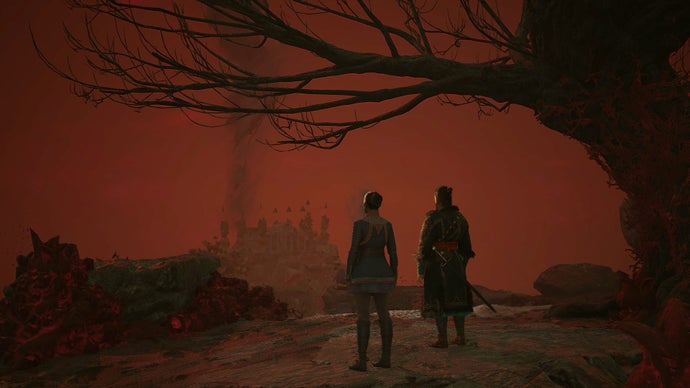
Of everything shown so far from The Blood of Dawnwalker — the dark fantasy vampire RPG from Rebel Wolves, the studio founded by former The Witcher 3 director Konrad Tomaszkiewicz — nothing has generated more debate than its ticking clock. And it turns out the mechanic nearly shipped in a far harsher form. In a new interview, Tomaszkiewicz confirmed that the game’s timer was significantly toned down before release, and the reason is squarely the wave of pre-release complaints from players.
The Countdown That Used to Bite Much Harder
The Blood of Dawnwalker drops players into a quarantined medieval valley in the Carpathians and gives them a hard deadline: 30 days and 30 nights to save their family from an ancient vampire. You play as Coen, a “dawnwalker” caught between humanity and the night, using mortal skills by day and vampiric powers after dark. Crucially, time keeps moving as you explore, fight, and chase side stories — every decision literally costs you hours.
According to Tomaszkiewicz, that system was originally far more punishing. But as previews and community discussion circulated ahead of launch, a vocal chunk of prospective players pushed back hard against the idea of being rushed through a sprawling, story-driven RPG. The studio listened, and the pressure valve was loosened.
Why Players Pushed Back So Hard
The resistance is easy to understand. Timers in RPGs carry baggage: they evoke the stress of old-school Dead Rising deadlines or the oppressive dread of Pathologic. Many fans worried that a strict countdown would turn a rich, choice-heavy world into a checklist of anxiety, where exploring a beautiful handcrafted valley feels like a mistake. When a game promises branching narratives and reactive side quests, the fear of “missing” content can be enough to sour the whole fantasy.
Why the Timer Might Be the Game’s Best Idea
Here’s the counterargument, and it’s a strong one: the clock is arguably what makes The Blood of Dawnwalker genuinely different from every other post-Witcher open-world RPG on the market. Urgency transforms choices into triage. Do you spend precious night hours hunting for a cure, or raid a fortress while your vampire powers are at their peak? A countdown makes failure, sacrifice, and imperfection part of the design rather than something to be reloaded away.
Games like The Legend of Zelda: Majora’s Mask proved decades ago that time limits can create some of gaming’s most memorable, replayable structures. Strip that away, and you risk ending up with another epic where you can politely do absolutely everything before the finale — technically impressive, dramatically inert.
Future Dawnwalker Games May Drop the Timer Entirely
Here’s where it gets more interesting. Just last week, Tomaszkiewicz revealed that the timer mechanics may be dropped altogether in future installments of what Rebel Wolves envisions as an eventual series, with this first game acting as the opening chapter of a larger saga. In other words, the studio is already hedging on its boldest mechanic before the first game is even in players’ hands.
Our Take: Player Feedback Is a Double-Edged Sword
There’s a real tension here worth acknowledging. Developers absolutely should listen to their communities — but pre-release complaints come from people who haven’t actually played the game, reacting to a concept rather than an experience. Sanding the edges off a daring mechanic before launch risks smoothing a game into something safe and familiar. Sometimes the friction is the point, and the best RPGs are the ones brave enough to make you a little uncomfortable.
Whether the softened timer strikes the right balance between dread and freedom, we’ll find out when The Blood of Dawnwalker launches on PC, PlayStation 5, and Xbox Series X|S. If you’re planning to jump in on day one, you can grab discounted Steam gift cards and wallet codes at TURGAME.com to make sure your library — and your wallet — are ready for the 30-day countdown.
Source: Rock Paper Shotgun
Source: Rock Paper Shotgun