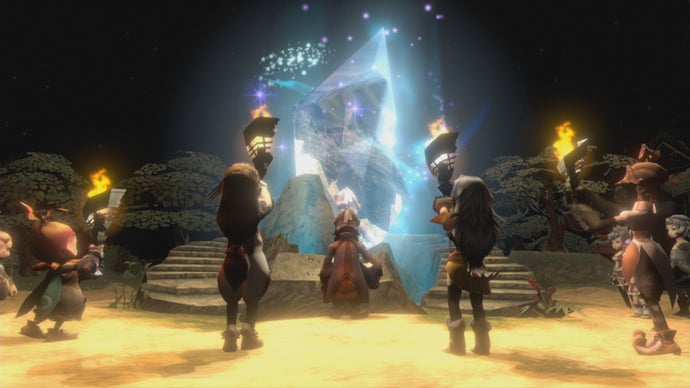
The video game music world has a strange new controversy on its hands. Kumi Tanioka, the acclaimed composer behind Final Fantasy Crystal Chronicles, has publicly distanced herself from a newly appeared album on her own Spotify artist page — an album that fans and observers widely believe was generated by artificial intelligence.
Who Is Kumi Tanioka?
Even if the name doesn’t immediately ring a bell, there’s a very good chance you’ve heard her music. Tanioka is best known as the composer of Final Fantasy Crystal Chronicles, the beloved GameCube classic whose gentle, folk-inspired soundtrack remains one of the most cherished in the Final Fantasy extended family.
A Career Spanning Square Enix and Nintendo
- Final Fantasy Crystal Chronicles — her signature work as lead composer
- Final Fantasy XI — contributions to the long-running MMO’s score
- Hyrule Warriors: Age of Calamity — composing for Nintendo’s Zelda spin-off
- Yoshi and the Mysterious Book — one of her most recent projects
In other words, this is a composer with an unmistakable style and a genuinely distinguished resume — which makes the current situation all the more frustrating for her and her fans.
An Album She Says She Never Wrote
According to Rock Paper Shotgun, a new album quietly appeared on Tanioka’s Spotify page, presented to listeners as if it were an official release from the composer herself. The problem? Tanioka says she had nothing to do with it. The composer expressed her own confusion over the release, making it clear that this music is not her creation.
While the exact origins of the album remain unclear, the suspicion — shared by fans and reported by Rock Paper Shotgun — is that the tracks were produced using AI music generation tools and uploaded by someone attempting to pass the work off as hers, potentially to farm streams and revenue off her name.
The Bigger Problem: AI Music Flooding Streaming Platforms
Unfortunately, this incident fits into a much larger and increasingly ugly pattern. Over the past couple of years, streaming services have been flooded with AI-generated tracks, some of them deliberately uploaded under the names of real artists to siphon off their audiences and royalties.
Why Game Composers Are Especially Vulnerable
Video game composers sit in a particularly awkward spot. Unlike pop stars with large legal teams and label backing, many game music composers work as freelancers or small studios with limited resources to police their artist pages across every platform. A beloved name like Tanioka’s — instantly recognizable to Final Fantasy and Nintendo fans — is exactly the kind of brand an opportunistic uploader can exploit, counting on casual listeners to press play without questioning whether the release is legitimate.
It also raises uncomfortable questions for fans: if you can’t trust that the music on an artist’s official page is actually theirs, what does that mean for how we discover and support the composers we love?
How to Support Tanioka’s Real Music
The best answer, as always, is to go straight to the source. Her authentic soundtracks for Final Fantasy Crystal Chronicles, Hyrule Warriors: Age of Calamity, and other titles are available through official channels — and the games themselves are the ultimate way to experience her work in context.
If you’d like to dive into (or revisit) the games behind her music, you can pick up Final Fantasy Crystal Chronicles Remastered game codes and Nintendo eShop gift cards at TURGAME.com, where digital keys are delivered instantly at competitive prices.
Here’s hoping Spotify acts quickly to clean up Tanioka’s artist page — and that this serves as yet another wake-up call about the damage unchecked AI slop can do to real artists.
Source: Rock Paper Shotgun
Source: Rock Paper Shotgun